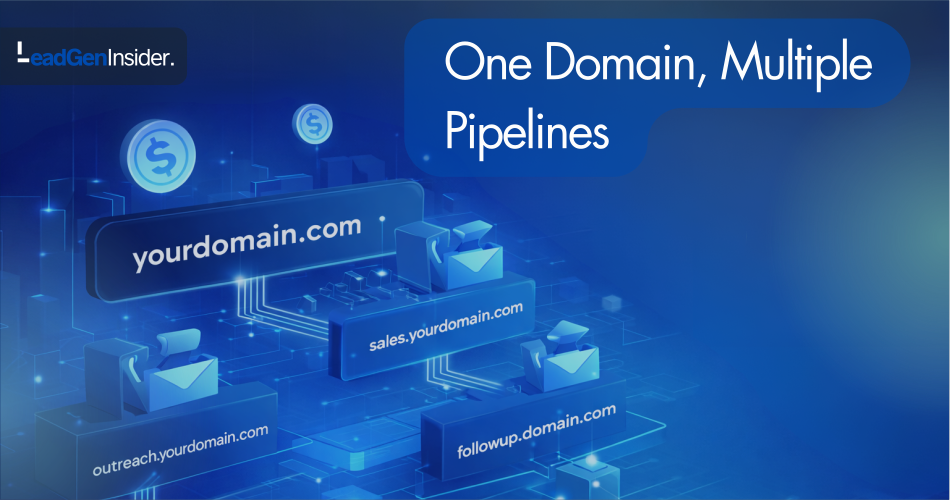
Enter the subdomain strategy.
Instead of managing a growing list of separate domains, you can build multiple outreach pipelines under a single primary domain using structured subdomains. This approach lets you expand email operations, segment campaigns, and maintain deliverability — all while keeping infrastructure lean.
Why Traditional Domain Scaling Gets Expensive
The common playbook looks like this:
- Buy new domains for each campaign
- Set up separate inbox environments
- Maintain domain warmup and reputation individually
This works… until it doesn’t. Costs stack up quickly, and operational complexity becomes a bottleneck. Worse, managing dozens of unrelated domains can fragment your deliverability strategy.
The Subdomain Advantage
Subdomains act like independent lanes under your main domain. For example:
- outreach.yourdomain.com
- sales.yourdomain.com
- followup.yourdomain.com
Each subdomain can host its own inbox structure, sending profile, and campaign segmentation — without requiring a brand-new domain purchase.
This creates a scalable framework where:
- Campaigns remain isolated for reputation management
- Sending volumes are distributed intelligently
- Infrastructure stays centralized
- Costs remain predictable
You’re essentially multiplying your outreach capacity while keeping your domain ecosystem clean and manageable.
Inbox Architecture That Scales
Within each subdomain, you can create multiple inboxes dedicated to specific workflows:
- Prospecting sequences
- Follow-up automation
- Reactivation campaigns
- Niche targeting
This layered approach spreads activity naturally, reducing risk signals while maintaining consistent engagement patterns — a key factor in inbox placement.
Deliverability Without Domain Sprawl
One of the biggest myths in cold outreach is that more domains automatically mean safer sending. In reality, smart distribution matters more than sheer quantity.
A well-managed subdomain framework allows:
- Reputation segmentation
- Controlled ramp-up
- Easier monitoring
- Simplified DNS management
Instead of juggling dozens of scattered assets, your sending ecosystem becomes structured and intentional.
Cost Efficiency Meets Operational Control
For growth-focused teams, the financial advantage is obvious:
- Fewer domain purchases
- Reduced setup overhead
- Centralized management
- Lower maintenance burden
But the real win is operational clarity. Campaigns stay organized, troubleshooting becomes faster, and scaling no longer feels chaotic.
The Bigger Picture: Infrastructure as a Growth Lever
Lead generation isn’t just about messaging — it’s about the systems that support volume and consistency. Subdomain-driven inbox architecture gives teams a professional-grade foundation to grow outreach without runaway costs.
Smart infrastructure isn’t flashy, but it quietly determines how far your pipeline can scale.
And in a competitive market, efficiency isn’t optional — it’s leverage.
If your outreach system feels bloated, fragmented, or expensive, it may be time to rethink how your domains are structured. Sometimes the best scaling strategy isn’t adding more — it’s organizing what you already have.